Why High-Growth, High-Cashflow Property Matters Now
Part 1 of 3 of The 2026 Blueprint: A Three-Part Series
Most investors do not miss out because they buy in the wrong suburb. They miss out because they buy without a real plan. Wrong price. Wrong structure. Wrong time frame. Then they hope the market will sort it out for them.
Rental markets across Australia are tight. Recent national vacancy figures sit close to 1–1.5% (SQM Research, 2025, 2026; Property Update, 2026), which is well below the 2–3% range many people still treat as normal (Property Update, 2026). In simple terms, there are more tenants looking than there are homes available. That makes good rental stock harder to find and easier for landlords to rent.
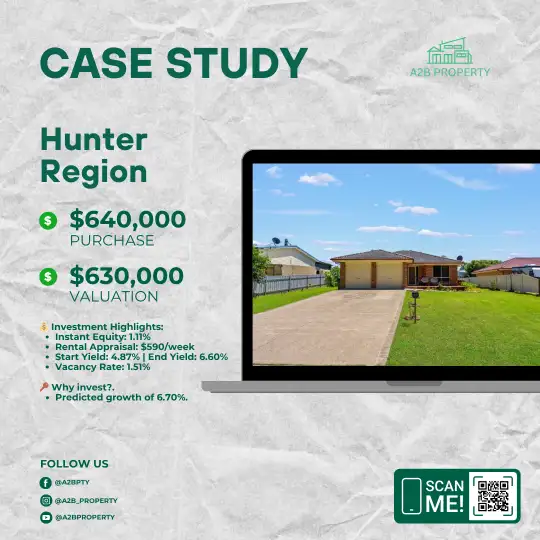
Income also looks different once you step outside the big capital city postcodes. Average yields in the main capitals often begin with a 3 (Global Property Guide, 2025). In many regional areas and strong outer belts of New South Wales and Victoria, it is common to find starting yields in the high 4% to 5.5% (IFS Mentor, 2025) for the right kind of asset. Over time, house prices in growth areas have also shown strong compounding (Aussie, 2019; Real Estate Institute of Australia [REIA], 2024), even through the usual ups and downs.
So today, many investors are looking at the same basic picture:
-
Vacancies are very low in a lot of areas (SQM Research, 2025, 2026).
-
Regional locations often receive stronger rental yields than capital city locations.
-
Well-located houses with strong growth drive in infrastructure and population have risen strongly in value over long periods.
If you already own or want to own an investment property, that mix matters. It affects how easy it is to find a tenant, how much of the holding cost the rent can cover, and how long you may need to hold before you see the result you want.
Some people respond by chasing the highest yield they can see online. That usually leads to lists of small towns with the lack of long-term growth drivers and one-industry towns. On paper, many of these show very high rent. In real life, they can move around quickly when projects change, demand falls or new stock comes on.
At A2B, most of the people we work with want something steadier. They want strong cash flow, but they also want a growth story they can explain without a crystal ball. For that group, a more realistic target is usually a yield in the 4.5–6% range in markets with broader economic drivers. Think multiple employers, infrastructure spending, population trends and a track record of demand. Property that is realistic to buy and realistic to hold, with a future that does not rely on one factory.
This is where the Blueprint starts.

Step 1: Get Clear on Your 10–15 Year Picture
You do not need a finance degree to think like an investor. You do need to be honest with yourself. It helps to start well before the listing photos and the open homes.
Ask yourself three questions:
- First, in 10–15 years, what do you actually want property to be doing for you? Do you want more of the mortgage covered? Less pressure on weekly bills. The choice to work fewer hours. An earlier retirement. There is no single right answer. There is only your answer.
- Second, if your properties were giving you an extra A$1,000–A$3,000 a month at that 10-15 stage, what would that change in a practical way? Would it mean more room in the family budget? Different school or lifestyle choices. Less stress if interest rates move again. Making this concrete matters. It turns the idea of wealth from a vague goal into something you can see in your own life.
- Third, are you truly willing to hold a property for 7-10 years or more? Or are you quietly hoping for a quick jump in value? Long-term data from the Australian market reports show that established growth areas tend to pull ahead of pure yield plays over a full decade. Cash flow matters because it keeps the lights on. Growth usually does most of the heavy lifting on net wealth over 10–25 years.
This is why we talk about both sides of the equation. Many clients arrive wanting to buy near home. Once they look at price and yield in detail, they often open up to other areas. Sydney and Melbourne have shown strong long-term performance, but entry prices and yields around 2–3% can make it harder to both buy and hold with confidence. Growth areas in New South Wales and Victoria that sit outside the inner ring can offer a different balance: higher yields, purchase prices that feel possible, and enough people and infrastructure to support long-term demand.
When we work with clients, we keep three anchors in mind:
-
Can they afford to buy the property without stretching too far?
-
Can they afford to hold it through normal changes in rates and rents?
-
Does the area and the specific asset have a probable path to growth and upside, not just a big rent number today?
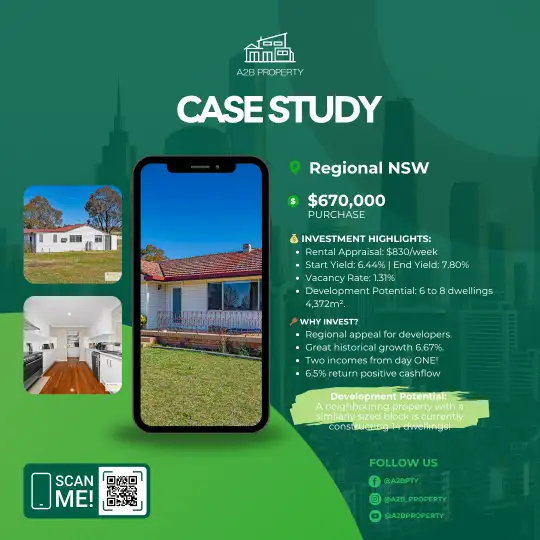
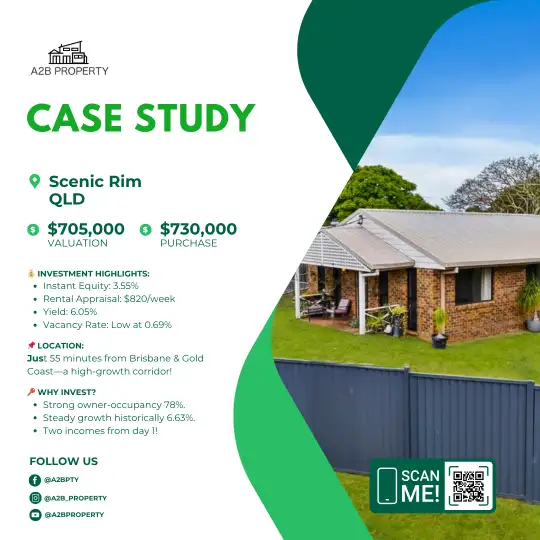
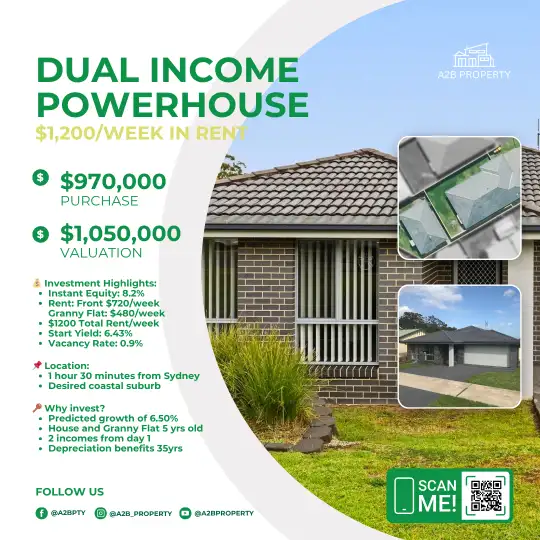
In practice, this has often meant helping clients buy at a discount to recent comparable sales when the negotiation allows it and then adding value. It has also meant setting up multi-income situations in the right locations, such as a house with a compliant granny flat or other dual-income setups that push yields into the mid-5s or higher. These are not get-rich-quick plays. They are sensible changes to a regular purchase that make the numbers easier to live with over time.
Step 1 is about getting clear on this bigger picture. Step 2 is about where to look. Step 3 is about what you do with the property once you know you are in the right kind of area.
If you enjoy doing your own research, you can use this first step as a guide. Compare it with your own numbers and adjust it to your risk and debt tolerance. If the learning curve feels steep or the stakes feel high for trial and error, we are here when you are ready. We take the numbers seriously, and we know property is only one part of your plan. When you need full financial planning or lending advice, we work alongside licensed planners and brokers rather than trying to replace them.
Ready to Stop Guessing or Still Filling in the Gaps?
Ready to stop guessing. Book a call, and we will help map out what a realistic property investment looks like for your numbers and time frame.
Still in research mode?
Save this series and follow on to Part 2, where we look at a simple, step-by-step process for shortlisting suburbs without drowning in tabs.
Rerefences:
Aussie. (2019). 25 years of housing trends.
CBRE. (2025, March 18). Apartment vacancy and rent outlook report 1H 2025.
Real Estate Institute of Australia. (2024). Real estate market facts: 20 years.
SQM Research. (2025, October 14). National vacancy rate steady at 1.2% in September 2025.
SQM Research. (2025, December 11). National vacancy rate rises to 1.3% as rental conditions ease slightly.
SQM Research. (2026, February 12). The latest rental vacancy rates around Australia.